
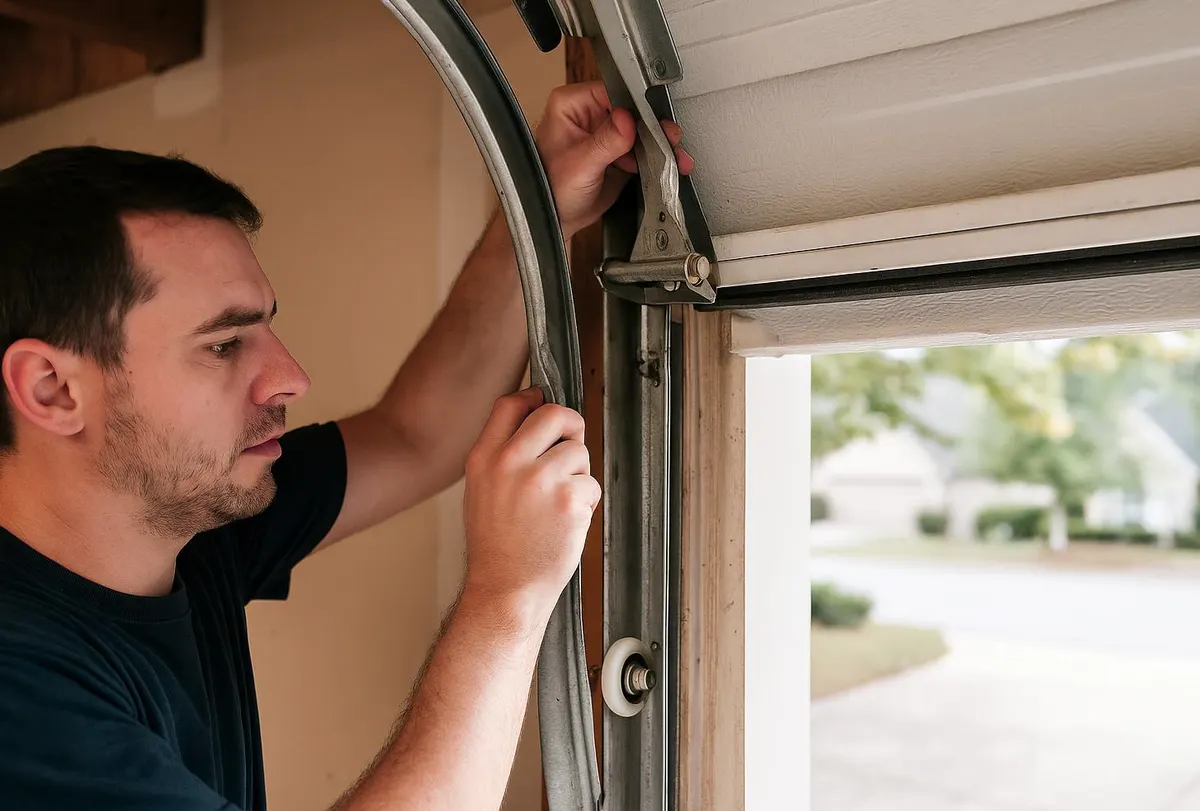
What a Technician Sees on a Typical Fall Call
Most calls this time of year start the same way: a homeowner says the door was fine all summer, and now it's "sticking," groaning, or reversing halfway up. A tech shows up, opens the garage, and the pattern is usually obvious within a few minutes — stiff springs that haven't been lubricated since spring, tracks caked with dried road salt and grit tracked in on tires, or a sensor lens fogged over from humidity swings. None of it is dramatic. It's just a door that's been doing its job all summer without anyone checking on it, and now the first cold snap is exposing every small thing that got ignored.
Around Logan County, that first cold snap tends to arrive fast. One week it's humid and 70 degrees, the next there's frost on the windshield. Garage doors feel that swing more than almost anything else on the house, because they're the largest moving part exposed to outside temperature, and they rely on moving parts — springs, rollers, cables — that behave very differently in 30-degree weather than they do in July.
Why Cold Weather Hits Garage Doors Harder Here
Steel contracts in the cold, lubricants thicken, and rubber seals lose flexibility. In a region with big seasonal swings like this one, a door that opened smoothly in September can feel noticeably heavier and jerkier by December. Add in ice and road salt tracked onto the garage floor and up into the tracks, and you've got a recipe for rust, grinding noise, and premature wear on rollers and hinges.
Torsion springs are especially sensitive to this. Cold metal is more brittle and under more stress, so a spring that was already near the end of its life is far more likely to snap in January than in July. If your door has felt heavy or made a popping sound recently, that's worth addressing before the hard freeze, not after.
A Practical Pre-Winter Checklist
- Lubricate moving parts. Use a silicone or lithium-based garage door lubricant on hinges, rollers, and the springs themselves. Avoid WD-40 as a long-term lubricant — it's a solvent, not a lubricant, and it will leave parts drier over time.
- Inspect and clean the tracks. Wipe down the tracks to remove dried salt residue and grit. A stiff brush and a damp cloth work fine. Built-up debris in the tracks is one of the most common causes of a door that binds or reverses unexpectedly in winter.
- Check the weather stripping. The rubber seal along the bottom of the door and the vinyl seals along the sides often crack or flatten after a summer of heat. Cracked seals let cold air, mice, and moisture into the garage, and in this climate that usually means a wetter, colder garage all winter — and sometimes a frozen seal that tears when the door opens.
- Test the auto-reverse and sensors. Place a piece of wood flat on the ground where the door closes; the door should reverse on contact. Also check that the photo-eye sensors near the bottom of the tracks are aligned and free of condensation or dust, since humidity swings can cause moisture to collect on the lenses.
- Listen for spring noise. A healthy torsion spring is quiet. Grinding, popping, or a visible gap in the coil means it's under uneven stress and more likely to fail in cold weather.
- Check the opener's force settings. Cold-stiffened springs change how much resistance the opener has to work against. If the door was adjusted in spring, it may need a force and limit check now so the opener isn't straining against a heavier door.
- Look at the garage itself. If the garage isn't insulated, pipes along the back wall and any utility connections running through it are more exposed to freezing. An insulated door section or weather seal kit can help moderate the swing, especially in an attached garage.
Spring and Opener Trade-Offs Worth Knowing
Homeowners sometimes ask whether they can just "wait out" a spring that's starting to sound rough. The trade-off is straightforward: a spring replacement done on your schedule, in daylight, with the door otherwise working, is a controlled job. A spring that snaps in January during a cold morning means a door that won't open at all — sometimes with a car trapped inside or outside — and an emergency call during the busiest, iciest part of the season. Replacing a tired spring before winter isn't about being overly cautious; it's about avoiding the one failure mode that actually strands people.
Opener batteries are a smaller but similar story. Battery backup units lose capacity faster in cold garages. If yours is more than a few years old, fall is a good time to test it rather than discovering during an ice storm power outage that it won't hold a charge.
When to Call Lakeview Garage Door
If your door feels heavier than it used to, makes a grinding or popping noise near the top of the tracks, or the opener strains and stutters partway through the cycle, those are signs worth having looked at before the real cold arrives. Lakeview Garage Door handles spring replacement for doors showing wear or uneven tension, and offers preventive maintenance visits that cover lubrication, track cleaning, sensor alignment, and a full hardware check — the same things a technician does on a typical fall call, just done ahead of the problem instead of during an emergency. We serve homeowners and businesses throughout Lakeview, Russells Point, Bellefontaine, DeGraff, West Liberty, Huntsville, East Liberty, and Quincy, and we show up on time and get it done right.
If you're searching for a garage door company near Indian Lake or looking for garage door service in Logan County, OH, before the first real freeze hits, give Lakeview Garage Door a call. A straightforward fall maintenance visit now is a lot cheaper and a lot less stressful than an emergency repair on an icy morning in Lakeview, OH.